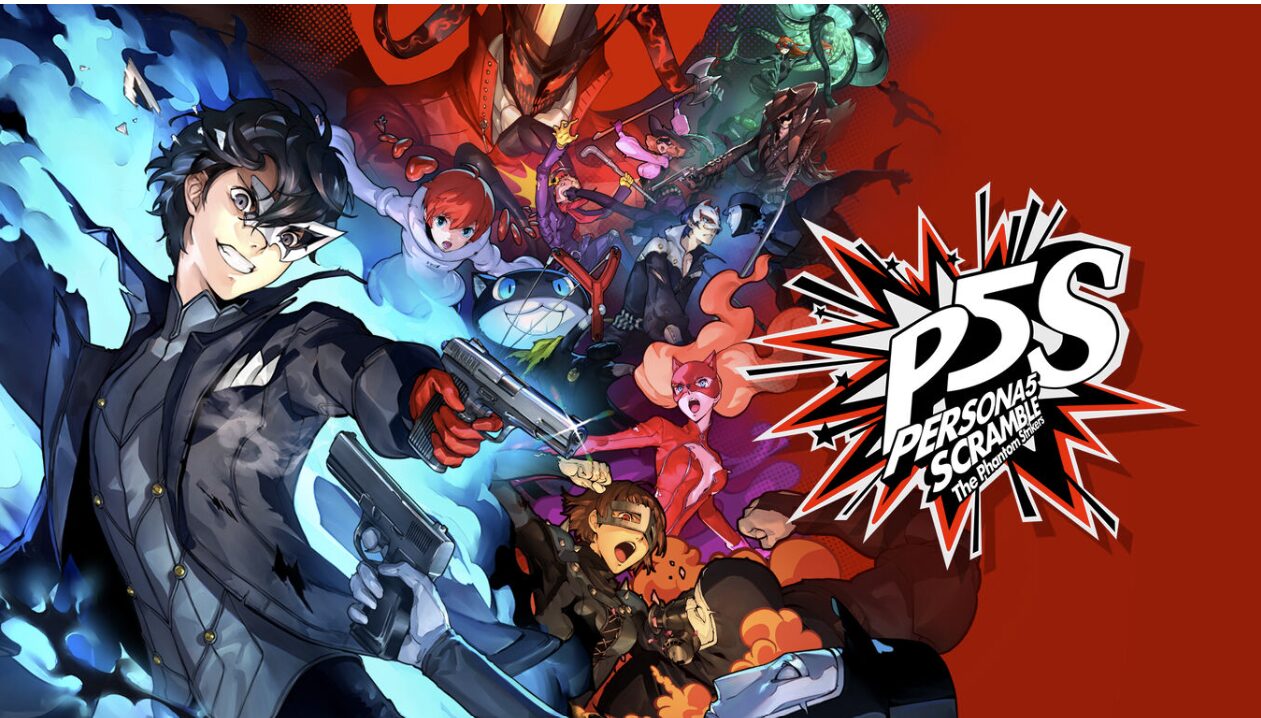
After finishing Persona 5 Strikers, I can confidently say that it is much more than a simple spin-off or a Persona-themed musou game.
At first glance, the game looks like a crossover between Persona 5 and Dynasty Warriors. Large groups of enemies fill the screen, the Phantom Thieves perform flashy attacks, and battles move at a much faster pace than the turn-based combat of the original game.
That description is not entirely wrong.
Persona 5 Strikers certainly offers the satisfaction of knocking down dozens of enemies at once. Its combat is fast, stylish, and often spectacular. However, anyone who runs directly into a crowd and starts pressing attack buttons without thinking will quickly discover that the game is not a mindless power fantasy.
Enemy weaknesses still matter. SP management still matters. Party composition, buffs, healing, status effects, and Persona selection all play important roles.
Underneath its action-game appearance, Persona 5 Strikers still feels unmistakably like Persona.
More importantly, the story is far better than many players may expect from a spin-off. It gives the Phantom Thieves another meaningful adventure, introduces excellent new characters, and explores themes that fit naturally within the world of Persona 5.
For players who loved the original Phantom Thieves, this is a game that deserves serious attention.
This review contains no major story spoilers, so it should be safe for anyone deciding whether to begin the game.
- What Is Persona 5 Strikers?
- Available Platforms
- Play Persona 5 First
- It Looks Like a Musou Game, but It Does Not Play Like a Mindless One
- Strategy Still Matters
- Charging Directly Into Enemies Can Get You Killed
- The Phantom Thieves Are All Playable
- It Still Feels Like Persona
- The Story Is Much Better Than Expected
- A Road Trip Across Japan
- Sophia Is an Excellent New Character
- Zenkichi Is One of the Most Interesting Adult Characters in Persona 5
- Important Warning for Persona 5 Royal Players
- The Social Simulation Elements Are Reduced
- Cooking and Shopping Are More Important Than They First Appear
- Boss Battles Require Preparation
- The Difficulty Can Be Adjusted
- What I Liked Most
- What Could Have Been Better
- Who Should Play Persona 5 Strikers?
- Final Verdict
- Related Posts:
What Is Persona 5 Strikers?
Persona 5 Strikers, known in Japan as Persona 5 Scramble: The Phantom Strikers, is an action RPG and follow-up story to the original Persona 5.
The game takes place several months after the ending of Persona 5. The protagonist returns to Tokyo during summer vacation and reunites with the other members of the Phantom Thieves.
Their initial plan is simple: spend the summer together, enjoy good food, and take a trip around Japan.
Naturally, things do not remain peaceful for long.
A mysterious series of incidents begins occurring across the country. People are behaving strangely, powerful individuals appear to be manipulating others, and the Phantom Thieves soon find themselves returning to the Metaverse.
Instead of remaining mainly in Tokyo, the group travels to several locations around Japan. This gives the game a road-trip structure that feels very different from the school-year format of the original.
In many ways, Persona 5 Strikers can be described as a Phantom Thieves summer vacation combined with a new supernatural investigation.
It is officially a spin-off, but the scale and quality of the story make it feel closer to a genuine sequel.
Available Platforms
Persona 5 Strikers is available on PlayStation 4, Nintendo Switch, and PC through Steam.
There is no separate native PlayStation 5 version, but the PlayStation 4 edition can be played on PS5 through backward compatibility.
In practical terms, the game is accessible to players using a PS4, PS5, Nintendo Switch, or gaming PC.
The best version depends on how you prefer to play.
The PlayStation and PC versions generally offer stronger performance and shorter loading times, while the Nintendo Switch version provides the convenience of portable play.
Because the game includes many conversations, story scenes, and longer dungeon sections, being able to play in handheld mode can be especially appealing. On the other hand, the colorful visual effects and large-scale battles look excellent on a larger screen.
Play Persona 5 First
It is technically possible to begin Persona 5 Strikers without playing Persona 5, but I strongly recommend experiencing the original game first.
The story assumes that you already know the Phantom Thieves.
It does not spend much time explaining how Joker met Ryuji, Ann, Yusuke, Makoto, Futaba, Haru, or Morgana. Their personal struggles and the events that brought the group together are treated as shared history.
Many conversations also feel more meaningful when you understand the characters’ previous experiences.
Seeing the team reunite is one of the game’s greatest pleasures. Ryuji is still loud and passionate. Ann remains caring and emotionally perceptive. Yusuke continues to view the world through his wonderfully strange artistic perspective. Makoto is dependable, Futaba is energetic and awkward, Haru is gentle but occasionally intimidating, and Morgana still acts as the group’s guide.
These personalities are already established when the story begins.
For returning players, even ordinary conversations between the characters feel rewarding. It is like meeting a group of old friends after a long separation.
Players who finish Persona 5 and find themselves wishing for one more adventure with the Phantom Thieves are exactly the audience that Persona 5 Strikers was made for.
It Looks Like a Musou Game, but It Does Not Play Like a Mindless One
The most obvious difference between Persona 5 Strikers and the original game is the combat system.
The original Persona 5 uses turn-based battles. Players select attacks, skills, items, and defensive actions from menus.
Persona 5 Strikers replaces that system with real-time action.
You can move freely around the battlefield, perform light and heavy attacks, dodge enemy strikes, jump, fire guns, use environmental objects, summon Personas, and switch between party members.
Large groups of Shadows often appear at the same time. Attacking a crowd and launching several enemies into the air can be extremely satisfying.
This is why the game is often described as a musou-style title.
However, it would be misleading to assume that Persona 5 Strikers is simply Dynasty Warriors with Persona characters.
If you enter a battle and attack without paying attention, enemies can defeat you surprisingly quickly.
Even regular Shadows can interrupt your attacks or surround you. Stronger enemies can remove a large portion of your HP with a single skill. Bosses punish careless positioning and often require a proper understanding of their weaknesses.
The game offers the visual excitement of a large-scale action game, but it retains the decision-making of a Persona RPG.
That combination is one of its greatest strengths.
Strategy Still Matters
Elemental weaknesses remain central to combat.
Enemies may be weak to fire, ice, electricity, wind, psychic, nuclear, bless, curse, or physical attacks. Exploiting those weaknesses reduces their down gauge and creates opportunities for follow-up attacks or All-Out Attacks.
This means that combat is not only about reaction speed.
Players must identify enemy weaknesses, choose the correct character or Persona, and decide when to spend SP.
Joker remains especially flexible because he can carry and switch between multiple Personas. A well-prepared set of Personas allows him to respond to almost any enemy type.
The other Phantom Thieves have more specialized roles.
Ann is associated with fire. Ryuji uses electricity. Morgana uses wind and healing. Yusuke focuses on ice. Makoto uses nuclear attacks. Haru can use psychic skills, while Futaba supports the team rather than fighting directly.
Building a balanced party can make difficult encounters significantly easier.
SP management is also important. Persona skills are powerful, but using them constantly can leave the party without enough resources for later battles.
Players must learn to combine normal attack strings with Persona skills. Many combo attacks allow characters to use weaker versions of elemental abilities without consuming SP.
Environmental objects can also be used against enemies. Depending on the location, the Phantom Thieves can jump from structures, spin around poles, drop objects, or launch special attacks from elevated positions.
The result is a combat system that rewards both preparation and improvisation.
Charging Directly Into Enemies Can Get You Killed
One of the biggest surprises in Persona 5 Strikers is its difficulty.
The game looks like it should be easy to dominate. The Phantom Thieves are fast, stylish, and capable of hitting many enemies at once.
However, aggressive play without proper awareness is often punished.
Enemy attacks can come from outside the camera. Visual effects can fill the screen, making danger difficult to notice. Several attacks landing in succession can reduce a character’s HP before the player has time to respond.
Dodging is therefore essential.
It is often better to wait for an opening, attack briefly, and move away than to complete a long combo while a boss prepares a powerful move.
Healing and support skills should not be treated as optional. Buffing the party, lowering an enemy’s statistics, or using defensive abilities can have a major effect during difficult battles.
The game also encourages players to leave a dungeon, restore resources, purchase supplies, and return later.
Unlike the original Persona 5, leaving a Jail generally does not cause the calendar to advance. This means that there is little reason to continue fighting when the party has almost no SP or healing items remaining.
Preparing properly is part of the game.
The action is exciting, but the best results come from playing thoughtfully.
The Phantom Thieves Are All Playable
Another major attraction is the ability to control different members of the Phantom Thieves directly.
In the original game, players primarily controlled Joker’s decisions while choosing commands for the other characters.
In Persona 5 Strikers, every active fighter has a distinctive action style.
Joker can switch between Personas and adapt to many situations. Ryuji uses powerful attacks that can be charged for additional damage. Ann can enhance her whip attacks with fire. Yusuke is fast and can counter enemy attacks. Makoto can activate her Burst ability and add nuclear power to her strikes. Haru uses heavy weapons and can hold certain attacks to extend them. Morgana transforms during some of his actions and moves quickly around the battlefield.
The new playable characters also have unique mechanics.
Switching characters during battle is highly useful. It allows players to exploit weaknesses, escape a dangerous situation, or continue attacking while another character recovers.
There is also a system that rewards using multiple party members. As players become more familiar with each character, they unlock additional abilities and improve their effectiveness.
This encourages experimentation instead of using Joker for every encounter.
Controlling a favorite Phantom Thief directly is one of the most enjoyable parts of the game. Characters who were already appealing in turn-based combat become even more expressive when the player can perform their signature attacks in real time.
It Still Feels Like Persona
Changing a turn-based RPG into an action game could easily have removed the identity of the series.
Fortunately, Persona 5 Strikers preserves most of the elements that made the original memorable.
The user interface remains stylish. Menus move with the same energy and confidence associated with Persona 5. Battles use familiar concepts such as weaknesses, Personas, All-Out Attacks, guns, and showtime-style special moves.
The soundtrack also plays a major role.
The game includes energetic remixes of music from Persona 5 as well as original tracks created specifically for the new journey. The music fits the faster combat while still sounding like part of the same world.
The writing is also consistent with the original characters.
The Phantom Thieves joke, argue, cook, explore cities, and support each other. Their relationships feel believable because the game understands how they interact.
Even though the combat system has changed completely, the atmosphere has not.
This is not an unrelated action game wearing Persona costumes. It feels like a real Persona adventure designed around action combat.
The Story Is Much Better Than Expected
Spin-off games often provide enjoyable fan service but relatively simple stories.
Persona 5 Strikers goes much further.
Its central mystery is treated seriously, and the villains are connected to themes that fit naturally with the original game.
The Phantom Thieves once again confront people whose distorted desires are harming others. However, the new story does not simply repeat the same conflicts.
The group has already experienced the events of Persona 5. They have faced powerful adults, questioned their own methods, and learned what it means to change someone’s heart.
In Strikers, those experiences affect the way they respond to new victims and antagonists.
Several story arcs explore loneliness, trauma, manipulation, social pressure, and the human desire to escape pain.
The game also asks important questions about justice and salvation.
Is changing someone’s heart always the right solution? What does it mean to help a person who has caused suffering? Can technology truly understand human emotions? Is removing pain the same as creating happiness?
These ideas give the game more emotional weight than its action-focused marketing may suggest.
The final sections are especially strong. Without revealing details, the story successfully connects its new characters and central themes to the values of the Phantom Thieves.
By the time the credits appeared, the journey felt complete rather than disposable.
A Road Trip Across Japan
The road-trip structure gives Persona 5 Strikers a unique identity.
Instead of spending almost the entire game in Tokyo, the Phantom Thieves visit several Japanese cities and regions.
Each destination has its own atmosphere, local food, shops, scenery, and story.
For players outside Japan, this can be particularly enjoyable. The game offers a stylized virtual journey through the country, including famous urban areas, regional dishes, summer events, and local landmarks.
The travel scenes also create opportunities for relaxed character interactions.
The Phantom Thieves eat together, discuss what to buy, tease one another, and react to new places. These moments may not always be essential to the central plot, but they are essential to the emotional appeal of the game.
The original Persona 5 focused heavily on school life and the rhythm of daily life in Tokyo.
Strikers feels more like one long summer journey.
There is a sense of freedom in watching the characters leave their normal environment and travel together. At the same time, each new city brings another mystery, so the story continues to move forward.
The balance between vacation and investigation works extremely well.
Sophia Is an Excellent New Character
One of the most important new characters is Sophia.
The Phantom Thieves encounter her early in the story under unusual circumstances. She has limited knowledge of the world and wants to understand the human heart.
At first, she may seem like a typical innocent artificial-intelligence character. However, her development becomes much more meaningful as the story continues.
Sophia observes the Phantom Thieves and learns from their actions. She tries to understand friendship, compassion, pain, and personal identity.
Her direct and sometimes awkward way of speaking creates humorous moments, but she is not included only for comedy.
She is deeply connected to the major themes of the story.
Sophia also fits naturally into the group. She does not replace an existing character or feel like a temporary guest. Her interactions with Joker and the others gradually make her feel like a genuine member of the team.
Her design, personality, and battle style are all memorable.
By the end of the game, it is difficult to imagine Persona 5 Strikers without her.
Zenkichi Is One of the Most Interesting Adult Characters in Persona 5
The other major new character is Zenkichi Hasegawa.
Zenkichi is a member of law enforcement who becomes involved with the Phantom Thieves during their investigation.
His presence changes the group dynamic immediately.
The Phantom Thieves are mostly teenagers, while Zenkichi is an adult with professional responsibilities and a very different perspective on justice.
At first, he appears suspicious, slightly unreliable, and sometimes comical. He also struggles to understand the group’s behavior and often finds himself overwhelmed by their energy.
However, Zenkichi becomes much more complex as the story progresses.
His personal circumstances, responsibilities, regrets, and relationship with justice are explored in detail.
He is not simply an adult supervisor added to control the teenagers. He has his own emotional journey and must confront problems that he has avoided.
Zenkichi’s role also allows the story to examine the limitations faced by ordinary adults.
The Phantom Thieves can enter the Metaverse and fight distorted desires directly. Zenkichi, however, has spent years dealing with institutions, laws, compromises, and consequences.
This contrast makes him one of the most compelling additions to the Persona 5 cast.
Like Sophia, he earns his place in the story.
Important Warning for Persona 5 Royal Players
Players coming from Persona 5 Royal should understand one important point before beginning Persona 5 Strikers.
The game does not meaningfully include the additional story elements introduced in Persona 5 Royal.
Persona 5 Strikers was developed as a sequel to the original version of Persona 5, not as a direct continuation of Royal’s expanded ending.
As a result, Goro Akechi is not part of the playable Phantom Thieves, and Kasumi Yoshizawa, whose true identity is Sumire Yoshizawa, does not appear.
For many players, this may be disappointing.
Akechi receives significantly more development in Persona 5 Royal, and Sumire is one of the most important new characters in that version. Players who finish Royal may naturally expect both characters to be acknowledged in the next adventure.
That does not happen here.
It is best to think of Persona 5 Strikers as continuing from the original Persona 5 timeline.
This does not mean that the story is weak or incomplete.
Sophia and Zenkichi are excellent additions, and the existing Phantom Thieves receive plenty of attention. The new story stands successfully on its own.
Still, players should adjust their expectations before starting.
Anyone buying the game mainly to see Akechi or Sumire again will not find what they are looking for.
The Social Simulation Elements Are Reduced
Another difference from the main game is the reduced emphasis on daily-life simulation.
There is no full school calendar. Joker does not attend classes, answer questions, or choose how to spend every afternoon and evening.
The Confidant system is also absent.
Players cannot build individual social relationships in the same way as the original, and there are no traditional romance routes.
For some fans, this will be the biggest weakness.
The social simulation was a major part of Persona 5. Managing time, improving social statistics, spending time with friends, and deciding which Confidants to prioritize made each playthrough feel personal.
Persona 5 Strikers is more linear.
The group travels according to the story, visits each location, completes a Jail, and moves to the next stage of the journey.
However, the game does not completely abandon character interaction.
There are many conversations, optional requests, shopping opportunities, cooking scenes, and smaller moments with the Phantom Thieves. Players can explore cities and purchase local items.
The BOND system also replaces some forms of progression. Players earn points that can be spent on useful abilities, including stronger healing, increased statistics, improved item effects, and other benefits.
The game therefore retains RPG progression, but it does not recreate the daily-life structure of the original.
Players should approach it as a story-driven action RPG rather than another full social-simulation Persona game.
Cooking and Shopping Are More Important Than They First Appear
During the journey, Joker can learn recipes and prepare meals.
Cooking is more than a small side activity.
Many dishes restore HP or SP, making them extremely useful during longer dungeon sections and boss fights.
SP recovery items are especially valuable in Persona games. Buying every available recovery item and collecting cooking ingredients can make difficult areas much more manageable.
Each region offers different products and local specialties. Some ingredients are easier to find in particular cities, so checking shops before leaving an area is a good habit.
The shopping system also helps create the feeling of traveling through Japan.
Buying regional food is connected to both gameplay and atmosphere. The characters often discuss what they want to eat, and several memorable scenes involve meals.
Players who ignore cooking may find themselves struggling with resources.
Players who prepare properly can enter difficult battles with a much stronger supply of recovery options.
Boss Battles Require Preparation
Boss fights are among the strongest parts of the combat system.
They are not simply large enemies with more HP.
Many bosses have elemental weaknesses, special attack patterns, environmental mechanics, and multiple phases. Players must pay attention to positioning and choose appropriate party members.
Bringing the wrong team can make a fight much more difficult.
A character who can target the boss’s weakness may be essential, while a healer can prevent the party from collapsing during long encounters.
Buffs and debuffs are highly effective. Increasing attack or defense and reducing the enemy’s power can significantly change a battle.
Items also matter.
Before entering a major fight, it is wise to purchase healing items, prepare SP-restoring meals, update equipment, and check Joker’s Persona collection.
The game rewards players who treat bosses like Persona encounters rather than musou targets.
When a strategy works, the battles feel excellent. Breaking a boss’s down gauge, launching an All-Out Attack, switching characters, and avoiding a powerful counterattack creates a satisfying rhythm.
The Difficulty Can Be Adjusted
Players who are not comfortable with action games should not avoid Persona 5 Strikers automatically.
The game provides multiple difficulty options.
Lowering the difficulty allows players to focus more on the story and characters. It reduces the punishment for mistakes without removing the basic combat mechanics.
This is important because many Persona fans are primarily interested in story-driven RPGs rather than fast action games.
The controls may feel overwhelming at first, especially because the game introduces many systems in a relatively short time.
Normal attacks, special attacks, Persona skills, guns, dodging, jumping, character switching, environmental actions, and support abilities all compete for attention.
After several hours, the system becomes much easier to understand.
Players gradually learn which combinations activate elemental attacks, when to switch characters, and how to recognize enemy animations.
Anyone who finds the opening sections difficult should not assume that the entire game will feel the same.
The learning curve is real, but it is manageable.
What I Liked Most
The greatest success of Persona 5 Strikers is that it respects the identity of Persona 5 while doing something genuinely different.
It could have been a simple crossover built around familiar characters and repetitive battles.
Instead, it delivers a full journey with emotional stakes, substantial character development, memorable locations, and a combat system with surprising depth.
The Phantom Thieves still feel like themselves.
Their relationships remain entertaining, but the game also shows that they have matured. They use what they learned in the original story to help new people.
Sophia and Zenkichi are not shallow guest characters. Both receive meaningful development and contribute directly to the themes of the story.
The music and visual design remain exceptional.
The road-trip format gives the adventure a sense of movement and variety.
Most importantly, the game provides another opportunity to spend time with a cast that many players were not ready to leave behind.
Finishing the game feels like reaching the end of a long summer vacation.
There is satisfaction because the journey has reached a meaningful conclusion, but also sadness because the group must separate again.
What Could Have Been Better
The game is not perfect.
During large battles, visual effects can make the screen difficult to read. Enemy attacks may be hidden by explosions, Persona skills, and crowds of Shadows.
The camera can also become inconvenient in smaller areas or during encounters with several large enemies.
Combat may feel chaotic before the player understands the systems.
The absence of Confidants, romance, and a full social calendar will disappoint players who consider those features essential to Persona.
Some requests and repeated battles can also feel less exciting than the main story content.
The lack of Akechi and Sumire will be a major negative for certain Persona 5 Royal fans.
There are also moments when the game’s structure becomes predictable. Players arrive in a city, investigate a problem, enter a Jail, defeat a ruler, and continue the journey.
However, the quality of the characters and individual story arcs prevents the formula from becoming too repetitive.
None of these problems were serious enough to damage the overall experience for me.
Who Should Play Persona 5 Strikers?
Persona 5 Strikers is highly recommended for players who:
- Finished Persona 5 and want another Phantom Thieves story
- Enjoy story-driven action RPGs
- Want to control the Phantom Thieves directly
- Like fast combat but still want tactical decisions
- Enjoy Japanese road-trip settings
- Care about character interaction and emotional storytelling
- Want a game that combines musou-style action with Persona mechanics
The game may be less suitable for players who:
- Have never played Persona 5
- Mainly enjoy Persona for school life and romance
- Expect a direct continuation of Persona 5 Royal
- Only want to see Akechi or Sumire
- Dislike real-time action combat
Even for players who normally prefer turn-based RPGs, the adjustable difficulty makes the game worth considering.
Final Verdict
Persona 5 Strikers looks like a musou game, but it is much more strategic than its appearance suggests.
The battles are fast and satisfying, yet blindly charging into enemies often leads to defeat. Players must exploit weaknesses, manage SP, prepare items, change party members, and dodge dangerous attacks.
That combination of action and strategy allows the game to remain faithful to Persona.
The story is also excellent.
It gives the Phantom Thieves a believable reason to reunite, takes them on a memorable trip across Japan, and introduces new characters who become essential parts of the adventure.
Sophia and Zenkichi are among the strongest elements of the game.
Players should remember that Persona 5 Royal content is not included. Akechi and Sumire do not appear, so this should not be viewed as a direct sequel to Royal.
Instead, it is best understood as a continuation of the original Persona 5.
Even with that limitation, Persona 5 Strikers is an impressive follow-up.
It has stylish combat, excellent music, meaningful themes, lovable characters, and a story that feels worthy of the Phantom Thieves.
Anyone who loved Persona 5 and wants to reunite with Joker and his friends should give this game a chance.
The combat system may be different, but the heart of Persona is still there.
More English Articles
If you enjoy Japanese RPGs, action games, and game-related events, you may also enjoy these articles.
- Metaphor: ReFantazio Is Coming to Nintendo Switch 2 – One of the Best Modern JRPGs Is Now Easier to Recommend
A firsthand review of Metaphor: ReFantazio, including what makes its story, characters, and election-themed setting stand out among modern JRPGs. - Final Fantasy X 25th Anniversary Pop-Up Store in Tokyo – Is It Worth Visiting?
I visited the Final Fantasy X 25th Anniversary pop-up store in Tokyo and share the atmosphere, merchandise, and my impressions as a longtime FFX player. - San-X Paradise at Fuji-Q Highland – A New Must-Visit Destination for Japanese Character Fans
A firsthand visit to San-X Paradise at Fuji-Q Highland, with details about the shops, mini-games, atmosphere, and practical tips for visitors.